Health Anxiety: Why Your Body Feels Like the Enemy (and How to Break the Cycle)

A patient once told me she spent three hours on a Tuesday night convinced she had a brain tumor. She had Googled a headache. By midnight, she had worked through four possible diagnoses, checked her pupils in the mirror, and quietly drafted a mental goodbye to her family. By Wednesday morning, the headache was gone — and so was most of her sleep.
She is not unusual. I see some version of this story every single week.
Health anxiety — sometimes called illness anxiety disorder or, in older clinical language, hypochondria — is one of the most misunderstood and underestimated forms of anxiety I encounter in my practice.
If you’ve been searching for answers or considering health anxiety therapy, this experience may feel very familiar.
This post is my attempt to explain what health anxiety actually is, why it takes hold so powerfully, and — most importantly — what can help.
What is health anxiety?
Health anxiety is a condition where a person persistently fears having a serious illness despite medical reassurance.
It often involves a cycle of:
Noticing a sensation
Interpreting it as dangerous
Seeking reassurance (Googling, checking, asking others)
Feeling temporary relief
Then quickly doubting again
It is not simply “being a hypochondriac.” It is an anxiety pattern driven by how the brain processes uncertainty and bodily sensations.
And it’s worth noting that health anxiety exists on a spectrum. Mild health concern is entirely normal and adaptive — it motivates us to see a doctor when something is genuinely wrong. Health anxiety becomes a problem when the worry is disproportionate, persistent, and significantly interferes with daily life.
Can health anxiety cause real physical symptoms?
One of the most confusing parts of health anxiety is that the symptoms feel completely real — because they are.
Anxiety activates the body’s stress response, which can lead to:
Chest tightness
Tingling or numbness
Headaches
Dizziness
Heart palpitations
These sensations are not imagined. But the meaning attached to them is often driven by anxiety rather than illness.
This is why health anxiety can feel so convincing — the body is participating in the fear.
Why is health anxiety so common?
Health anxiety is far more prevalent than most people realize.
Estimates suggest that between 4–10% of the population meet clinical criteria at any given time. (Source)
If we include people who experience significant health-related worry without meeting the full diagnostic threshold, that number climbs considerably.
The internet changed everything
We now have instant access to an enormous library of worst-case medical information. Type any symptom into a search engine and within seconds you will be reading about rare cancers, autoimmune conditions, and neurological disorders.
For someone experiencing health anxiety, this access can quickly amplify fear. Our brains are wired to prioritise threatening information — it is a survival feature, not a flaw. But this means that the anxious mind does not scroll past the “rare but serious” entry. It fixates on it.
Our bodies are genuinely mysterious
The human body produces hundreds of sensations every single day — twinges, aches, flutters, tingles — most of which are entirely benign and go unnoticed.
When anxiety about health is present, attention narrows sharply onto the body. Sensations that would otherwise be filtered out are noticed, monitored, and interpreted. The more you pay attention to your heartbeat, the more irregular it will seem.
This is not imaginary — the sensations are real. The meaning assigned to them is where health anxiety begins to distort things.
Uncertainty is hard for everyone
One of the core features of all anxiety is difficulty tolerating uncertainty. And medicine is full of uncertainty. Doctors say things like “let’s monitor it” or “it’s probably nothing, but…”
For someone with health anxiety, “probably” is not reassuring — it is a crack that uncertainty floods through.
Health anxiety is, in many ways, an allergy to not knowing.
The post-pandemic effect
The COVID-19 pandemic significantly heightened health vigilance for millions of people — and understandably so. We were all instructed to monitor our bodies carefully, to take symptoms seriously.
For many, that heightened vigilance never fully switched off. In some cases, it evolved into ongoing health anxiety, where normal body sensations feel difficult to ignore or trust.
Combined with the long COVID phenomenon, in which real and unexplained symptoms persist for months, the line between reasonable concern and anxiety has become genuinely harder to navigate.
Health anxiety vs OCD: what’s the difference?

Many people wonder whether health anxiety is a form of OCD — and the answer is: sometimes.
Health anxiety and OCD overlap significantly. In both cases, the brain becomes stuck in a loop:
Intrusive thought (“What if something is wrong?”)
Anxiety spike
Compulsive behavior (Googling, checking, reassurance-seeking)
Temporary relief
Return of doubt
When compulsions become more rigid or time-consuming, it may fall closer to OCD health anxiety. Regardless of the label, the treatment approach is often very similar.
Why is health anxiety so challenging to treat?
The very things health anxiety tells you to do to feel better are often the things that keep it alive.
Health anxiety is one of the most self-perpetuating anxiety patterns I work with. The strategies people use to manage their fear — Googling symptoms, seeking reassurance, avoiding doctors, or conversely seeking constant medical check-ups — all provide short-term relief and long-term maintenance of the problem.
Let me explain what I mean. When you check your body and “confirm” that everything feels okay, anxiety drops briefly. But checking also teaches your brain that checking is necessary — that danger might be there, and only vigilance keeps you safe.
The relief you feel is not evidence that you are fine. In the anxious mind, it becomes evidence that you almost were not fine, and that checking saved you. This is how the health anxiety cycle reinforces itself. The cycle repeats.
Reassurance-seeking works the same way. When a loved one says, “I’m sure it’s nothing,” anxiety dips — and then, minutes or hours later, returns with a new question. Why? Because reassurance never actually resolves the underlying intolerance of uncertainty. It just defers it.
This is not a character flaw. It is a learning problem. The brain has learned an incorrect rule — “my safety depends on monitoring” — and it takes deliberate, consistent work to unlearn it. This is also why approaches like health anxiety therapy focus on breaking this cycle rather than trying to eliminate worry altogether.
How to manage health anxiety
The good news — and there is genuine good news here — is that health anxiety is highly treatable. It is not a life sentence.
If you’ve been searching for how to manage health anxiety, the approaches below are the ones most strongly supported by research — and the ones I see work consistently in practice.
If you want a deeper dive into practical techniques, you might also find this helpful: 3 practical techniques to cope with health anxiety
1. Cognitive Behavioural Therapy (CBT)
CBT is the gold-standard psychological treatment for health anxiety. It works by helping people identify the patterns of thought and behaviour that maintain the anxiety cycle, and gradually practise doing things differently.
This often includes learning how to:
Recognise unhelpful thought patterns
Question catastrophic interpretations
Respond differently to physical sensations
Tolerate uncertainty without immediately seeking reassurance
In many cases, this type of structured health anxiety therapy creates meaningful change relatively quickly.
2. Exposure and Response Prevention (ERP)
A specific component of CBT, ERP involves deliberately confronting feared situations — such as noticing a sensation without Googling it, or attending a medical appointment without seeking excessive reassurance afterward — and resisting the compulsive behaviours that usually follow.
In practice, this might look like:
Not Googling a symptom when the urge arises
Not checking your body for reassurance
Sitting with uncertainty after a doctor’s visit
Allowing a sensation to be present without reacting to it
Over time, this teaches the nervous system that uncertainty is survivable, and that the compulsions driven by health anxiety are not actually necessary for safety.
3. Reducing Reassurance-Seeking
This is hard, and I want to be honest about that. Asking people to simply “stop Googling” without support often backfires.
In therapy, we reduce reassurance-seeking gradually and systematically, building tolerance alongside the reduction. I also work with the family members and partners of people struggling with health anxiety, because well-meaning reassurance, however kind, can inadvertently fuel the cycle.
Common reassurance behaviours include:
Googling symptoms repeatedly
Asking loved ones, “Do you think this is serious?”
Checking your body for changes
Scheduling repeated medical visits for the same concern
4. Mindfulness and Body Awareness
Mindfulness practices can help people develop a different relationship with physical sensations — one of curious observation rather than alarm.
The goal is not to stop noticing the body, but to notice without immediately catastrophising. This takes practice and is often most effective when learned within health anxiety therapy, but even brief daily exercises can shift baseline anxiety over time.
Over time, this helps you:
Notice sensations without immediately interpreting them
Reduce the urgency to “figure it out”
Feel less reactive to normal bodily changes
Build trust in your body again
5. Medication
For moderate to severe health anxiety, SSRI medication (antidepressants that work on serotonin) can be an effective adjunct to therapy.
If you are considering this, a conversation with your GP or psychiatrist is the right first step. Medication is not a solution on its own, but it can lower the intensity of anxiety enough to make the therapeutic work feel more manageable.
6. Being honest with your doctor
This one matters more than people realize. Many people with health anxiety either avoid doctors entirely (out of fear of a diagnosis) or attend frequently but do not disclose the anxiety component.
Telling your GP that health anxiety is part of the picture allows them to calibrate their communication with you — and to refer you to appropriate support rather than continuing a cycle of testing that never fully reassures.
This might mean being honest about:
How often you think about symptoms
How much time you spend Googling or checking
Whether reassurance only helps temporarily
How much anxiety is impacting your daily life
How to stop health anxiety (or at least quiet the cycle)
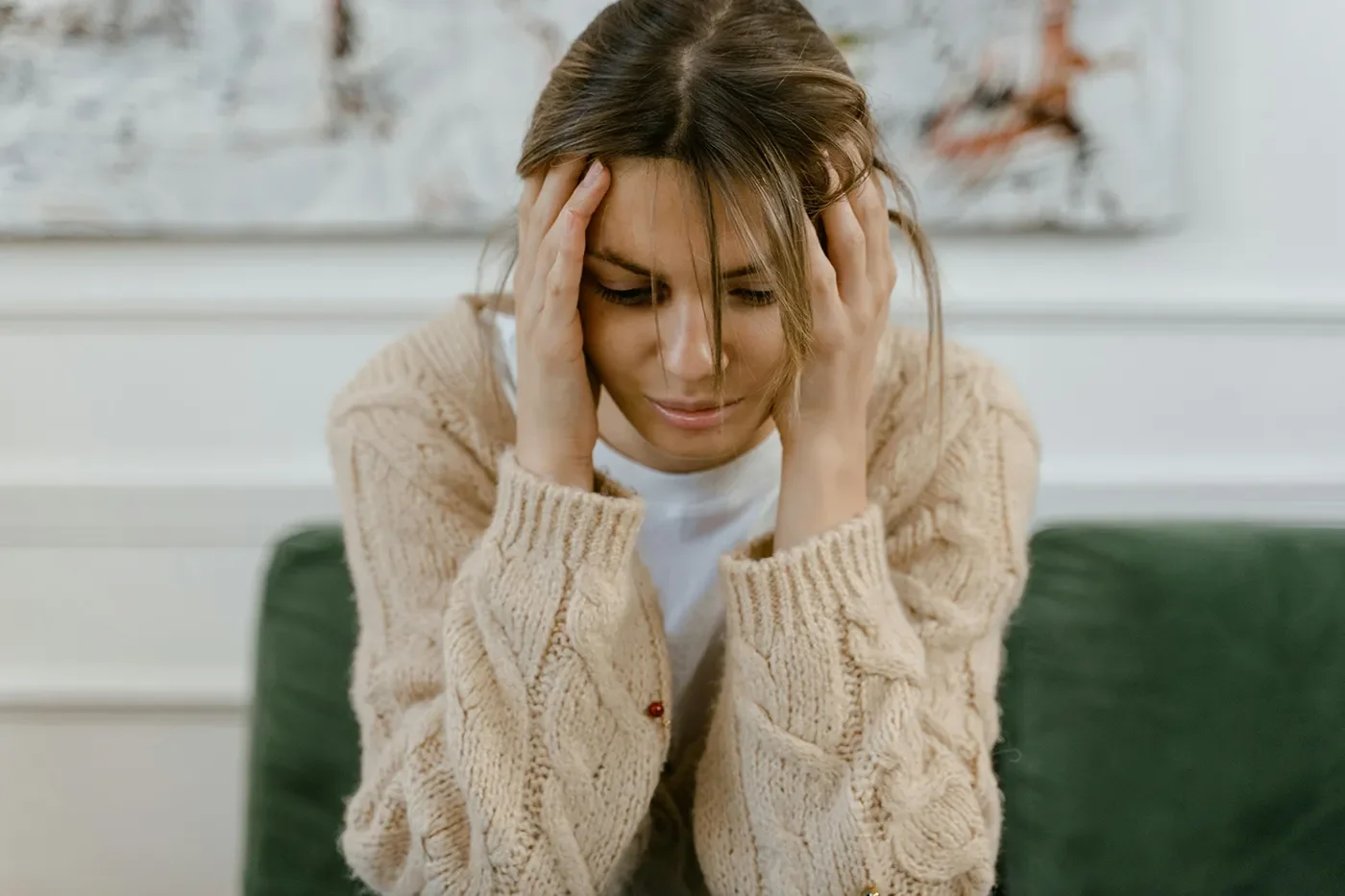
A question I hear often is: “How do I stop health anxiety?”
The honest answer is that the goal isn’t to eliminate the thoughts entirely. It’s to change your relationship to them.
That means:
Not immediately reacting to every sensation
Reducing checking and Googling behaviors
Learning to tolerate uncertainty instead of trying to eliminate it
Allowing discomfort without urgently trying to resolve it
This is difficult work — but it is learnable, and it becomes easier with the right support.
When to consider health anxiety therapy
Health anxiety is not weakness, and it is not “all in your head” in the dismissive sense. The fear is real. The suffering is real. What is not real is the level of danger your mind has learned to expect from every sensation.
You are not broken. You have a nervous system that is trying — a little too hard — to protect you.
And like all learned patterns, this one can be unlearned.
If any of this resonates with you, it may be time to seek support. Health anxiety therapy can help you break the cycle of fear, reduce constant worry, and feel more at ease in your body again.
At Caitlin Walsh Counseling, we specialize in helping women move out of anxiety spirals with anxiety therapy in Milwaukee and online and into a place of steadiness, clarity, and confidence. Learn more about anxiety therapy at Caitlin Walsh Counseling.
You do not have to live this way — and with the right support, change is very possible.
Schedule your free consultation today and start feeling more calm, clear, and in control.
Health anxiety FAQs
How do I stop health anxiety?
You don’t eliminate the thoughts—you learn to respond differently by reducing reassurance behaviors and building tolerance for uncertainty.
What causes health anxiety?
It’s usually a mix of anxiety sensitivity, past experiences, and difficulty tolerating uncertainty.
Can health anxiety cause fake symptoms?
The symptoms aren’t fake—they’re real physical responses to anxiety.
Is health anxiety a form of OCD?
Sometimes. There is significant overlap, especially when compulsive behaviors are involved.
How can I stop worrying about my health?
The key is breaking the reassurance cycle and learning to sit with uncertainty rather than trying to eliminate it.
This blog post is written for educational purposes and does not constitute medical or therapeutic advice. If you are experiencing significant health anxiety, please seek support from a qualified mental health professional.